Climate
What is Climate?
Climate is the pattern of the weather conditions in a particular area over a period of time. Every country has a different Climate, some are more alike then others but everyone is different in one way or another.
What are Climate zones?
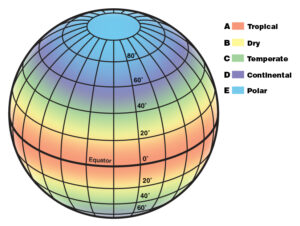
There are 6 different climate zones. These are 6 different sections of the earth. Depending on which section the country is in depends on which climate zone they are in.
SciJinks
The different climate zones are dependant on how close you are to the equator. The closer you are the hotter climate you have and the furthest away the coldest. This is a Rough idea of each Climate zone:
- Tropical- Hot & Humid such Mexico
- Arid- Dry such as Egypt
- Mediterranean- Hot dry summers & cold wet winters such as Italy
- Temperate- mild summers & mild winters such as the UK
- Continental- Long cold winters & short hot summers such as Russia
- Polar- very cold for a long period of time such as the poles
What Causes Climates to change?
The main course that effects the different climes is the use of greenhouse gasses.
“As greenhouse gas emissions blanket the Earth, they trap the sun’s heat. This leads to global warming and climate change. The world is now warming faster than at any point in recorded history.”
United Nations
Websit
It is not very common to link climate change and pollution to the internet and the use of websites. However “Cisco predicted that the internet will account for 3.5% of global carbon emissions by 2025, and Microsoft predict by that time, data centres will rank among the largest users of electrical power on the planet” said Tom Greenwood at the WordPress Meetup London.
This means it is more important then ever to be more aware of the websites we are producing/using and the impact it has on the Climate.
Tom Greenwood goes on to talk about three process that we can do to help us become greener on the web. Those steps were: Measuring Our Impact, Reduce Data Transfer and finally Use Cleaner Energy.
Measuring Our Impact
You can go onto websitecarbon.com This is a site where you can find out how much CO2 your website is producing every time someone views it. Most websites are usually on average 2.25 Grams of co2 per view.
Reduce Data Transfer
This is how fast your websites load. The more data you have on a website the longer it takes to load therefore the more emission it produces. The best way to lower this is to have smaller/ less pictures and to not have auto play on videos. These add a lot of data to a website and therefore produces more CO2.
Use Cleaner Energy

Credit to: Pxfuel
We have no way of controlling what energy people use to access all the different websites. However we can chose what energy we use to host these websites on. This is due to the fact that most CO2 from the internet comes from service farms and different data centres. If these areas can be charged by renewable energy it will reduce the amount of co2 produced by that website significantly.
Every little change helps stop the climate changing and helps us become a greener web.