1. Renewing, Upgrading & re-using old parts
There is a lot going round at the moment about how we need to become greener. The recent conflict between Russia and Ukraine has only heightened the need for it. Russia and China are the main sources of imports to the UK. We get some of our oil and gas from Russia, and we get a lot of our materials from China.

Credit to: Wikimedia Commons
We are living in what is known as the Information Age. It can also be called the Computer Age, Digital Age or the New Media Age. Our technology sources are ever expanding and changing. For example, a new iPhone is made roughly every year, a new Mac is also released roughly every year and so on with many different devices. This is something we see as good. However when it comes to the environment it is quite the opposite.
Every time a new device comes out there are many people all around the world who then throw their old device away even though it works perfectly fine. This leads to many devices being left in landfill. Not only that, but the different materials inside phones and laptops can be easily re-used which some people don’t know. This then means that some people go to landfill and collect different devices and try and make use/money out of them.
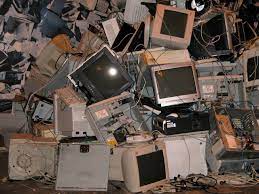
Credit to: PxHere

Credit to: PxHere
Not only having different devices end in landfill is bad but it is also bad for the environment to create these new devices. The majority of computer/phone parts come from China. Meaning it creates a lot of pollution to get those goods/parts over to the UK to be made and sold.
Therefore it is good for the environment if you remain with the same device until it does not serve the purpose you need anymore. Then rather then just getting rid of it, find ways to recycle it. Such as donating/selling the different parts. Even if the device does not work there will be parts inside that do, meaning it is possible to either mend the existing device or use the parts to mend other devices. This would then lead to less devices ending in landfill and less parts needing to be imported from China.
WEEE Recycling
In every company (and even in typical average homes) there will come a time when you need to update or replace your devices. As stated previously this leads to many devices being sent to landfill. However some devices such as laptops/computers maintain their information on their hard drive. It can be a dangerous situation when it comes to businesses and getting rid of those computers as this can lead to many companies hording their old computers and storing them never to be used or disposed of. Although this is better then them going to landfill, it still has the same effect of old computers just sitting around and one day being thrown away.
WEEE recycling is one way round this situation as they look to destroy all the hard drive data which then means those laptops can be recycled and reused with no harm to the company or data getting leaked.
“WEEE recycling helps to turn your business’s old IT equipment into new products without compromising your security” (shredall)
WEEE (Waste Electrical & Environment Equipment) is all devices that are either battery powered or gets plugged in.
2. Re-using precious metals
What are precious metals?
Some examples of precious metals are:
- Gold
- Silver
- Platinum
These are probably the well known precious metals. However a small amount of people know how much they are used and in what. For example I can guarantee right now you are close to some gold, maybe even all three.
Different devices are made using some of these metals. Take a phone as an example, there is gold in your sim card. Now if we look at your computer, there is gold in your motherboard.

Credit to: Pixabay
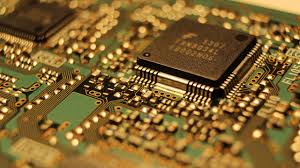
Credit to: Pixabay
Smartphones contain about 60 different elements – including not only gold but copper and silver too. All three are good conductors of electricity, and circuits usually receive a thin covering of gold because it doesn’t corrode and so ensures a durable connection.
If you collected roughly 41 mobile phones you would be able to recover around 1 gram of gold. Now if you are anything like me, I know for a fact I have at least 8 old phones in a box under my bed. Old phones are also not hard to come by, people can sell them for as little as £5.
When you hear 1g you may think that is teeny what’s the point. However to put it in perspective. “Most women’s gold wedding rings weigh between 1 gram and 7 grams” (Special Metals) This means if you collected 41 phones and extract all the gold you could use that gold for a wedding band that could cost hundreds.
If that is not enough, currently in the UK 1g of gold is worth roughly £47.08. That is a lot for some old phones sitting in a draw or in a box somewhere.
Not only is extracting the gold good for you due to it making you money it helps the environment.
Gold mining is one of the most destructive industries in the world. It can displace communities, contaminate drinking water, hurt workers, and destroy pristine environments. It pollutes water and land with mercury and cyanide, endangering the health of people and ecosystems. Producing gold for one wedding ring alone generates 20 tons of waste.
If all the old gold was taken from every old device we would have a lot of gold that could be used and therefore reduce the amount of mining we have to do. This would therefore reduce the pollution and destruction mining for gold produces.
3. Greener hosting
What is hosting?
Hosting (when it comes to websites) is a server that holds all the data for your website/platform. That server is normally found in a huge warehouse type building which has hundreds of different servers all working around the clock. As many people are aware the longer you keep your devices on the hotter, they get. Therefore, due to the fact the servers are on 24/7 they need to have a very effective fully functioning cooling system in place to stop the servers from burning up. Not only will it take a lot of power to keep those servers running but it will also use a lot of power to keep the cooling system working. This can lead to a lot of CO2 being produced.

Credit to: Flickr
In 2016, it was reported that the world’s data centres used more than Britain’s total electricity consumption – 416.2 terawatt hours, significantly higher than the UK’s 300 terawatt hours. At three percent of the global electricity supply and accounting for about two percent of total greenhouse gas emissions, data centres have the same carbon footprint as the aviation industry.
What is green hosting?
Due to server farms being so large it is very difficult to have one run on renewable energy. However, to green host a server farm does not need to necessarily use renewable energy. A Green hosting sign it one that tries to give back to the environment and make up for the pollution they do create.
Different server farms do this is a range of ways. Some have decided to plant trees, other has decided to make renewable energy and sell it and finally some has decided to buy into creating renewable energy. This means they do not use the energy themself, but they help other organisations and companies produce renewable energy therefore lowering their pollution.
You may wonder how to know whether your host company is green hosting. Well… “This is straightforward: If your host is Green, they will tell you, loudly and proudly!” (WHSR February 2022) It is a huge positive for a host company to be green. This is because it will make you want to have them as your host therefore will help them gain more money. The more information a host provides about what they do to be green the more likely that they do what they say. If you want to make sure there are certificates, they may receive if they are green and therefore should be able to provide that on their website too.
Conclusion
There are many ways you can be greener on the web. Some are smaller and easier, and others are slightly more challenging. Just remember every change you make towards been greener makes an impact. A small change is better than no change at all.